Section
Metrics & standards
How the numbers on a datasheet are defined, measured and misread — illuminance, glare, colour rendering, flicker and photometric files.
A datasheet number is the output of a procedure
Every figure on a luminaire datasheet — lumens, Ra, UGR, L70, a flicker percentage — is the result of a defined measurement carried out under defined conditions. The procedure is what the number means, and two numbers produced by different procedures do not compare even when they carry the same unit and the same name.
Most specification arguments we get drawn into come from that gap rather than from a supplier being dishonest. An LM-80 dataset describes bare LED packages held at a fixed case temperature on a test board. An LM-79 report describes an assembled luminaire, thermals and driver losses included. Both are legitimate; quoting a package lifetime as a luminaire lifetime is a category error, and it is the single most common one in this industry.
What each metric deliberately leaves out
The useful question about a metric is not what it measures but what it was designed not to measure. Ra averages the first eight test colours, all of them low-saturation pastels, which is why a source can post Ra 90 and still render saturated red badly — R9 sits outside the average and has to be asked for separately. Tabular UGR is computed for a standard reference room with defined surface reflectances; your room is not that room, and a catalogue "UGR<19" is a property of the test geometry as much as of the fitting. Flicker splits into two phenomena with two separate metrics and two separate limits, because the frequency band that causes visible fluctuation is not the band that freezes rotating machinery.
Illuminance carries the same trap in a different form. EN 12464-1 specifies maintained illuminance — the value the installation must still deliver at the end of the maintenance cycle — while catalogue calculations are routinely presented as initial. The gap between them is the maintenance factor, and a maintenance factor is not one number but a product of four: lamp lumen maintenance, lamp survival, luminaire maintenance and room surface maintenance. A specification that quotes a single illuminance figure with no reference plane, no uniformity requirement and no stated MF has not specified anything that can be verified on site.
How to use this section
The pages below take one metric each and do the same three things: state which document defines it, describe the measurement conditions it assumes, and show the specific way it gets misread in a tender. Where a standard governs the value we name the document and the clause rather than reproducing its tables, because those tables are licensed, they are revised, and a number transcribed onto a web page is a number nobody updates afterwards.
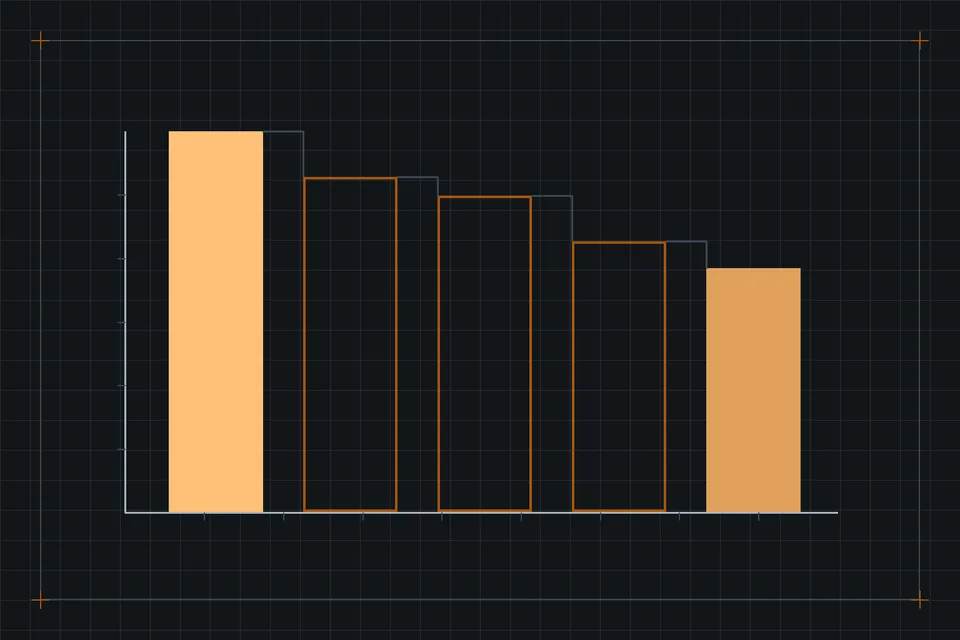 220 lm/W on the package, 130 lm/W on the ceiling: where luminaire efficacy goesHow a package efficacy figure becomes a luminaire efficacy figure, every derating step between them with a worked example, the four ways the number gets inflated on a datasheet, and why the highest efficacy on a tender is often the wrong fitting to buy.
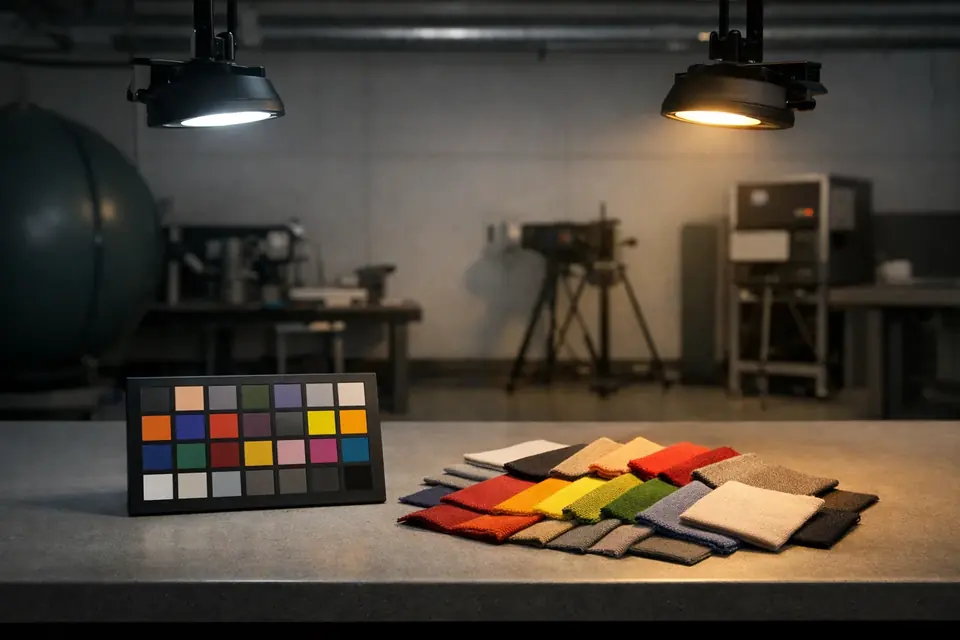 CRI 90 is not a colour quality specification, and TM-30 explains whyWhat Ra actually averages, the specific colours it omits, why R9 gets quoted separately, and how TM-30's Rf, Rg and colour vector graphic answer the question a single number cannot — which colours shift, and in which direction.
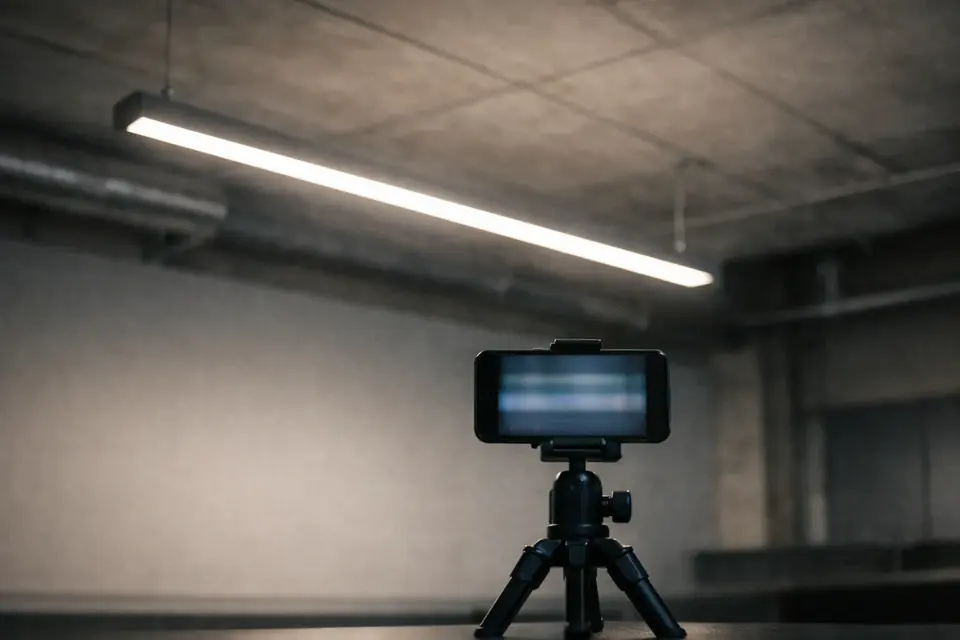 Flicker: what PstLM and SVM measure, and why a phone camera is only a screening toolThe two regulated flicker metrics, the driver topologies that cause failures, why the stroboscopic effect matters more than visible flicker in workshops, and an honest account of what a slow-motion phone video can and cannot tell you.
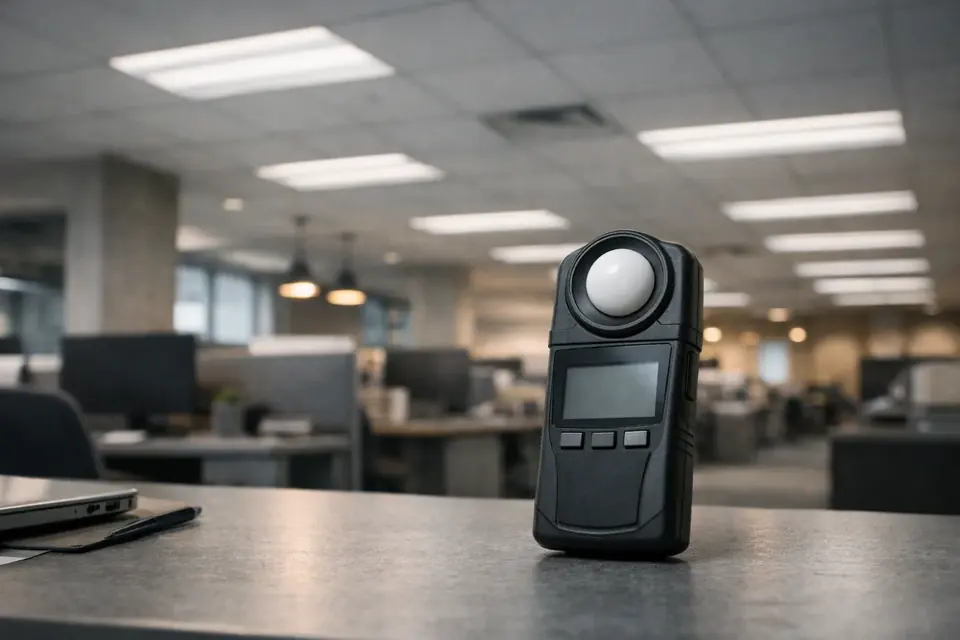 Maintained illuminance is not the number your lux meter reads on handoverWhy a room designed to 500 lx should measure well above 500 lx on day one, how the maintenance factor is built from four separate terms, and what goes wrong when a specification quotes a single illuminance number with no reference plane, no uniformity and no MF.
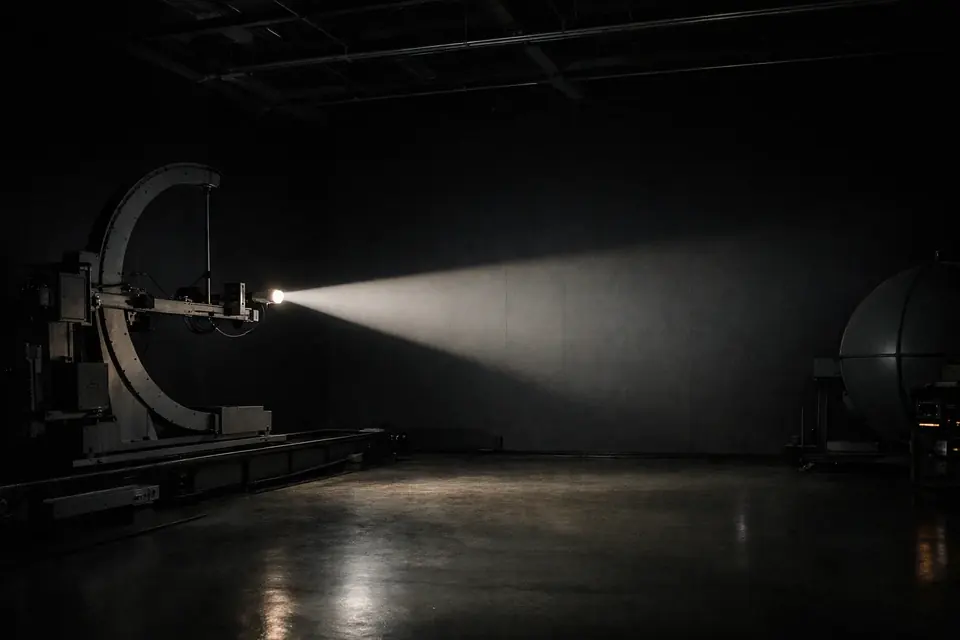 Reading an IES file, and the four checks that catch a fabricated oneWhat each field in an LM-63 photometric file means, how to verify the declared flux and efficacy against the candela data, the difference between a measured and a simulated file, and the scaling trick that turns one test report into a whole product range.
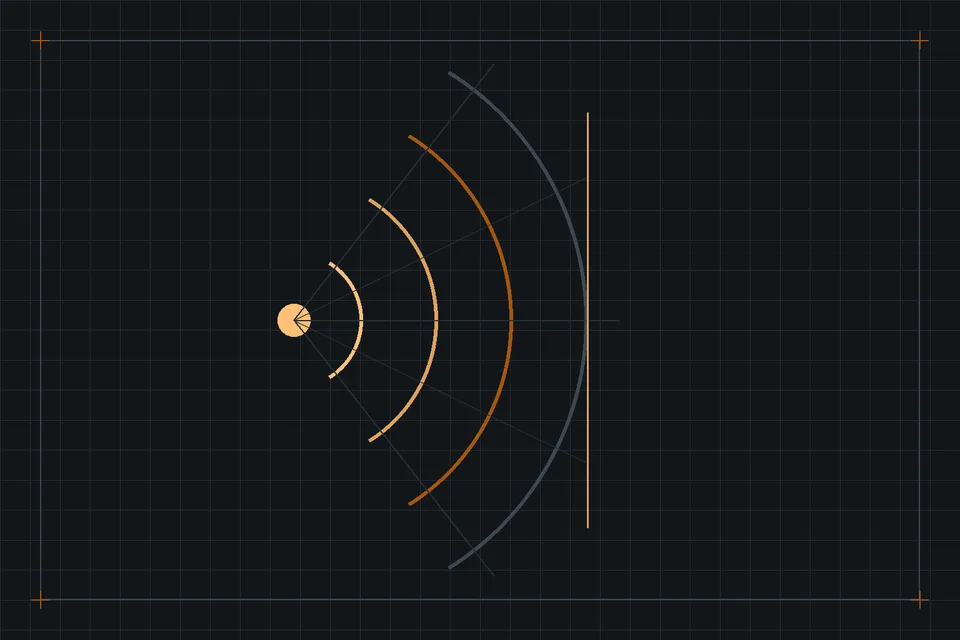 Risk groups on a lighting specification: what IEC 62471 does and does not sayWhat photobiological safety classification actually measures, why almost every white LED luminaire is RG0 or RG1, the threshold-distance approach in IEC TR 62778, where RG2 genuinely turns up, and how to write the clause without importing consumer blue-light claims into a technical document.
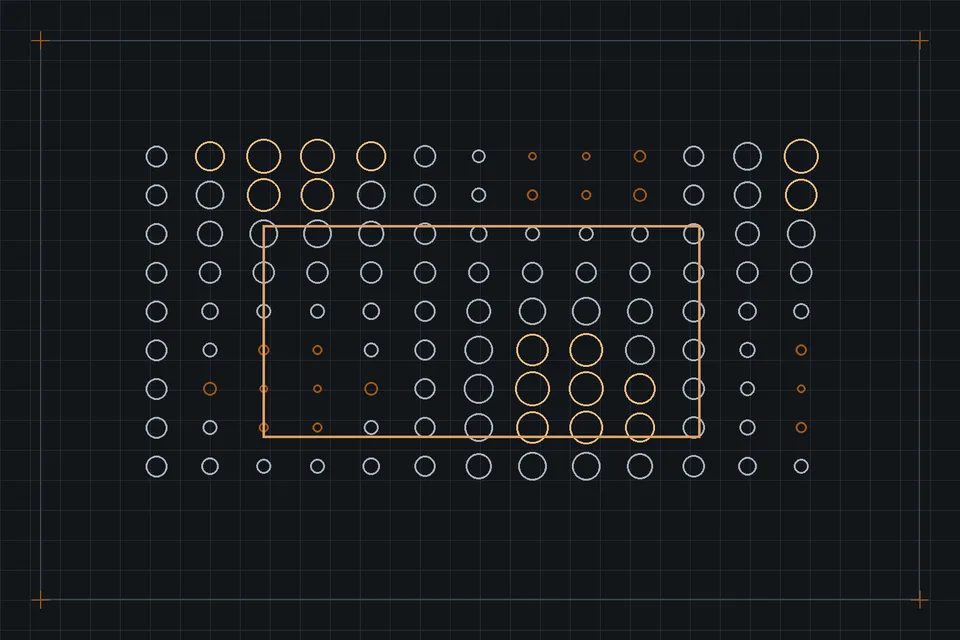 The average passed and the desk is dark: uniformity, Uo and the measurement gridWhy an installation can hit its average illuminance and still fail, what Uo is actually the ratio of, how the area you average over decides the answer, spacing-to-height ratio, and the three clauses that make uniformity verifiable on site.
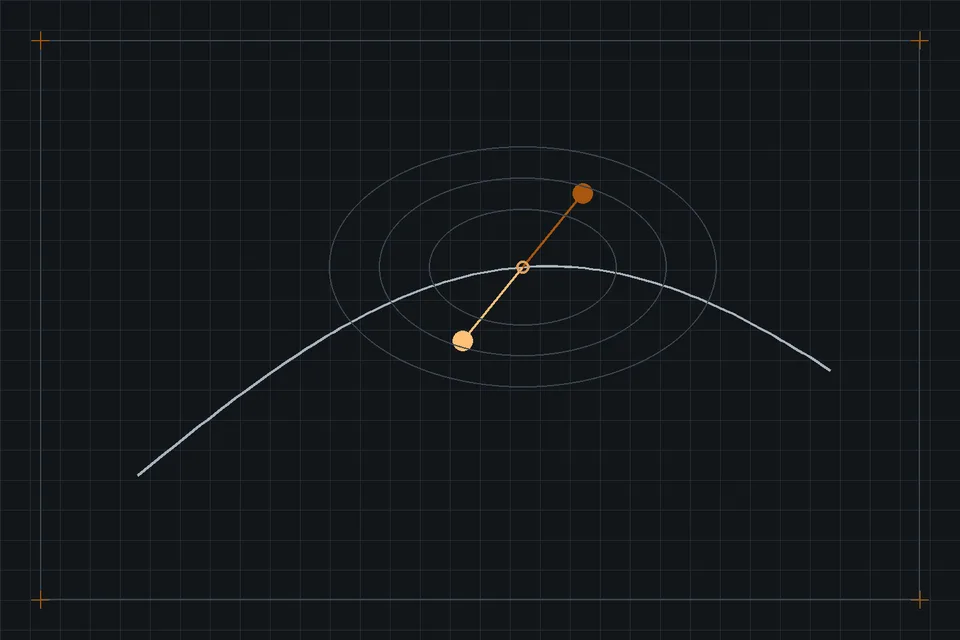 Two 4000 K products that do not match: CCT, Duv and the black-body locusWhy correlated colour temperature alone never pinned down a white, what Duv measures, how much of it the eye sees, and the two lines in a specification that stop a green-tinted delivery from being technically compliant.
 Why a luminaire marked "UGR<19" still glares in your roomUGR is a property of a room, an observer position and a viewing direction — not of a luminaire. What the catalogue figure actually assumes, the conditions under which the method is not valid at all, and why fluorescent-to-LED retrofits generate glare complaints at identical lumen output.