
Section
Calculators
Browser-based calculators for the four sums that come up on every project. Nothing is uploaded; the arithmetic runs locally and each tool shows its formula.
Four sums, with their formulae printed
These are the calculations that come up on essentially every commercial lighting project: how many luminaires a room needs, whether a retrofit pays back, whether a driver and its load are actually a legal pairing, and how far a run of LED strip can go before the far end is visibly dimmer than the near end.
None of them is difficult. All of them are done wrong routinely, because they get done in someone's head or in an inherited spreadsheet whose assumptions nobody has looked at in three years. Putting them in one place with the inputs exposed is mostly a way of making the assumptions arguable.
Why each tool shows its working
Every calculator here prints the formula it is evaluating, above the result. This is deliberate and it is the main thing separating these from the dozens of lighting calculators already on the web. A number without its assumptions cannot be used in a specification argument — if you cannot show a contractor which maintenance factor and which utilisation factor produced a luminaire count, the count is not defensible, and the first person to disagree with it wins by default.
It also means you can check us. The formulae are standard, the constants are stated, and if one of them is wrong we would rather be told than continue publishing it.
What runs where, and what leaves your browser
Nothing is uploaded. Each tool is a small piece of JavaScript that runs entirely in the page, so the numbers you type — which on a live tender are commercially sensitive — never reach a server, ours or anyone else's. There is no account, no save function and nothing to log in to; if you want to keep a result, copy it out.
What a calculator is not
The lumen method gives an average maintained illuminance over a working plane. It says nothing about uniformity, nothing about glare, and nothing about how the light is distributed within the room, all of which need the actual photometric distribution of the fitting and a proper calculation package. A payback figure is an input to a commercial decision, not the decision. A driver compliance window tells you a pairing is electrically defensible, not that it is thermally sound in the enclosure you plan to put it in.
These are screening tools: they are meant to tell you quickly whether a proposal is in the right region and where to push back, and to replace the arithmetic people currently do on the back of a drawing. Design sign-off for an occupied building still needs a qualified engineer with the drawings in front of them.
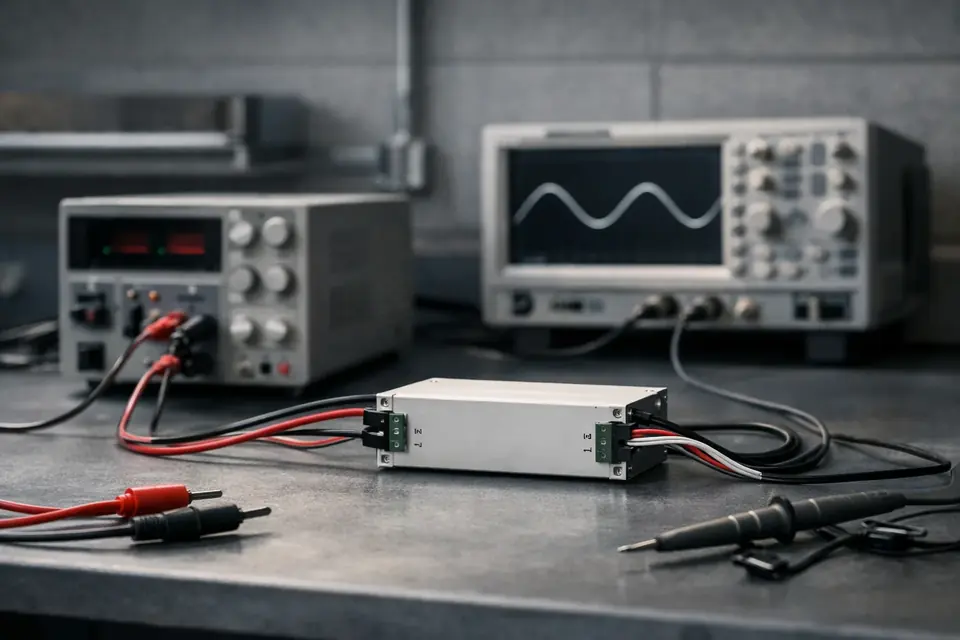 Driver compliance window and headroom calculatorChecks an LED string's forward voltage against a constant-current driver's compliance window at both temperature extremes and across the binning spread — the calculation that catches the fitting which starts fine in the workshop and refuses to start outdoors in January.
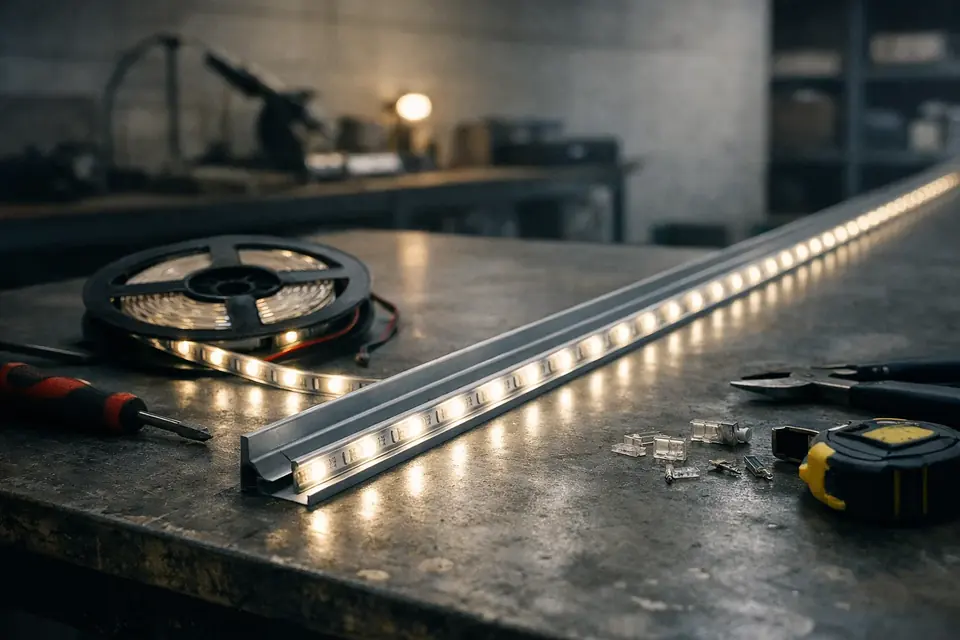 LED strip power supply and voltage drop calculatorSizes the power supply for a constant-voltage LED strip run and calculates the voltage drop along the strip and the feed cable, showing why long single-fed runs go dim and colour-shifted at the far end.
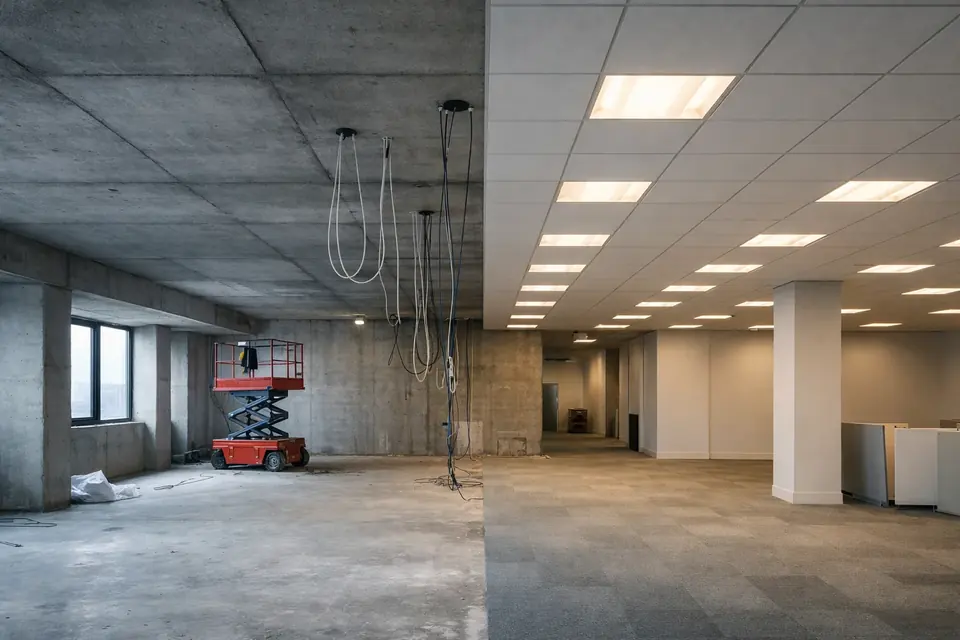 Luminaire count calculator (lumen method)Estimate how many luminaires a space needs using the standard lumen method, with the room index computed for you so you can read the correct utilisation factor from the manufacturer's table. Runs in your browser; shows its formula.
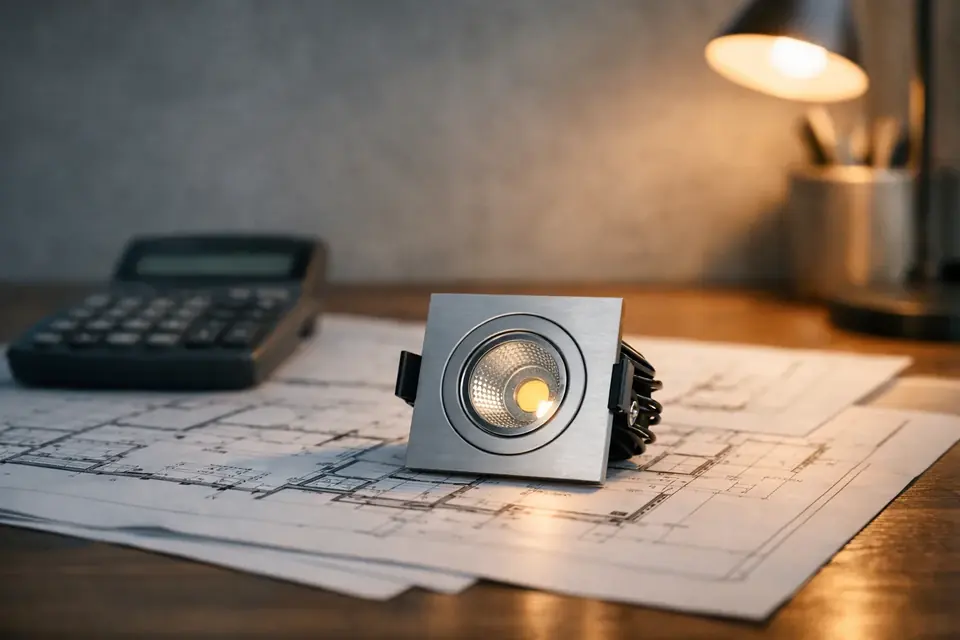 Retrofit payback calculatorSimple payback for a lighting retrofit including the lines that are usually left out — access cost, avoided relamping, ballast losses and controls savings. Runs in your browser and shows every formula it applies.