Acceptance & QC
A five-year warranty that pays for nothing: reading LED warranty terms
What a lighting warranty actually promises, why the failure fraction and the definition of failure decide its value, the exclusions that quietly remove most of the cost, how batch matching interacts with a replacement two years later, and eight clauses that make a warranty worth what it appears to be worth.
Warranty length is the easiest thing to compare on a tender and one of the least informative. Five years against three looks like a straightforward advantage until both documents are read, at which point the five-year offer turns out to cover the component and not its removal, to define failure in a way that excludes the thing that will actually go wrong, and to require the claimant to prove an operating condition nobody recorded.
What a warranty is promising
Three separate promises get bundled under one word, and a document may make any combination of them.
- Against defect. The unit was faulty when supplied or became faulty through a manufacturing cause. This is the narrowest and the most common.
- Against early failure of the population. No more than a stated fraction of the installed quantity will fail within the period. This is the one that matters on a large scheme and it is the one most often absent.
- Against performance decline. Output will not fall below a stated proportion of initial within the period. Meaningful only if measurable, which requires knowing the initial value — see below.
The two definitions that decide everything
What counts as a failure. A fitting that has gone dark is unambiguous. A fitting in which four emitters out of forty-eight have failed is not, and neither is one that is visibly dimmer than its neighbours, or one whose colour has drifted until it stands out in a row. A warranty that defines failure only as complete cessation of light output excludes the failure modes that produce most of the complaints. Ask for the definition to include a lumen threshold and a colour shift limit, and expect resistance, because those are the expensive ones.
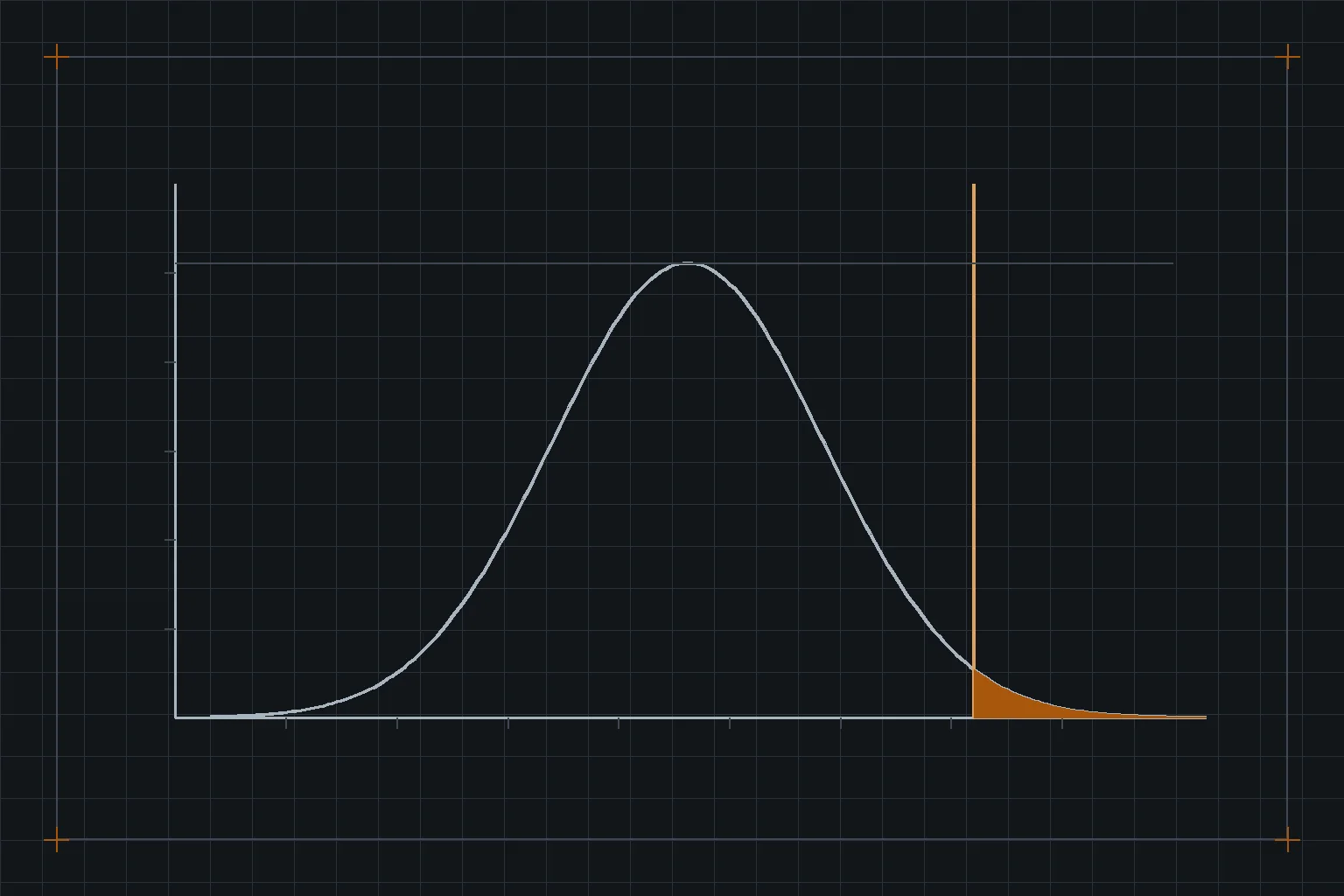
The failure fraction. Statements like "L80 B10 at 50 000 hours" carry two numbers, and the second is routinely ignored. L80 is the lumen threshold; B10 says that ten per cent of the population is permitted to be below it. On a thousand-fitting estate that is a hundred fittings, within specification. A warranty quoting an L value without a B value has not stated what fraction of your installation it applies to. The mechanism behind both is set out in L70, LM-80 and TM-21.
A warranty against output falling below 80 % of initial requires an agreed initial figure. If nobody measured the installation at handover, "initial" becomes whatever the datasheet said, and the claim becomes an argument about whether the fitting ever made that. Recording a set of reference readings at handover, on a defined grid, costs an evening and converts an unenforceable clause into an enforceable one — the method is in illuminance shortfall after retrofit.
The exclusions that remove the cost
The purchase price of a luminaire is usually the smallest part of what a failure costs. Read the exclusions with that in mind.
- Labour. Almost universally excluded. On a high bay at fourteen metres, or a recessed fitting in a plasterboard ceiling, access is the entire cost and the replacement unit is a rounding error.
- Consequential loss. Also universally excluded, and reasonably so — but it means the retail tenant's lost trading is not the manufacturer's problem.
- Operating conditions. Warranties are conditional on ambient temperature, supply voltage, switching frequency and hours of operation. All four are things your building does and nobody records. A supplier declining a claim because the plant room ambient exceeded the declared ta is within their rights, and you will not be able to show otherwise without data — which is an argument for logging ambient in the harsh locations from day one.
- Surge and transient events. Very commonly excluded, and the commonest cause of outdoor failures. Whether the exclusion bites depends on the protection you specified; see surge protection.
- Third-party control gear. A driver substituted during value engineering can void a luminaire warranty even where the substitution was approved commercially.
- Pro rata after a point. A ten-year warranty that pays 100 % in year one and 20 % in year eight is a different product from one that pays in full throughout, and both are described as ten-year.
The clause nobody writes and everybody needs
Two years after handover a fitting fails in the middle of a run. The replacement is supplied under warranty, arrives promptly, is installed, and is visibly a different white from the eleven fittings around it. The warranty has been honoured. The problem has got worse, because a dark fitting is obviously broken and a mismatched one looks like carelessness.
Chromaticity moves between production batches for reasons set out in colour consistency and SDCM, and no warranty in normal circulation promises a colour match on a replacement. Two remedies, both cheap at the time of order and impossible afterwards: reserve spares from the original batch as part of the purchase, and write a clause requiring replacements to be supplied within a stated Δu′v′ of the original delivery or, failing that, requiring the whole visual field to be replaced together.
Eight clauses worth insisting on
- Warranty period stated separately for luminaire, LED module and driver, because they are frequently different and the shortest one governs.
- Failure defined to include a lumen threshold and a colour shift limit, not only total loss of output.
- An L value with its B value, at a stated hour count and a stated operating temperature.
- The operating conditions the warranty is conditional on, listed explicitly, so that they can be designed for and recorded.
- Batch-matched replacements, or reserved spares from the original batch held for a defined period.
- A stated response and supply time for replacements. A warranty with no lead-time commitment can be honoured in fourteen weeks.
- What happens on product discontinuation — the successor product, or a compatible equivalent, named as an obligation rather than left to goodwill.
- Whether the warranty is from the manufacturer or the distributor, and whether it survives the distributor. On a ten-year term this is not a theoretical question.
None of this makes a warranty a substitute for buying a well-made product from a company that will still exist. It makes the document say what everyone already assumed it said, which is the whole job.
Sources and further reading
- IEC 62717 — LED module performance requirements, including the declaration of L and B values that a performance warranty should reference.
- IES LM-80 and TM-21 — the measurement and projection basis for any lumen maintenance claim, and the reportable limits on it.
- IEC 62722-2-1 — LED luminaire performance requirements and declared values.
- The consumer and commercial sale of goods legislation in your jurisdiction, which provides statutory rights independent of and in addition to any contractual warranty.